Get RESULTS Now!

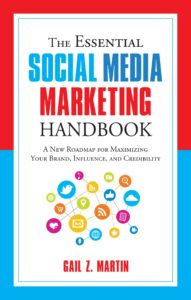
by Gail Z. Martin excerpted from 30 Days to Social Media Success

Everyone wants results from marketing and social media. In my experience over the last 25+ years, there’s a recipe for results that separates the winners from the losers. Just like in the kitchen, it’s a recipe you need to follow in order to get the outcome you expect. Leave out an ingredient and it won’t work as well. Skip a few steps, and you’ll be disappointed.

Here’s my list of ‘secret’ ingredients:

The RESULTS™ approach stands for:

R = Recommit to marketing

E = Expect success

S = Seek partners

U = Understand your audience

L = Look for win-win scenarios

T = Take strategic action

S = Stay visible

In the next 30 days, you can see your social media marketing go from zero to full speed by applying the RESULTS™ formula.

Recommit to set aside at least 30 minutes each day (yes, weekends, too) to devote to developing your social media marketing strategy for the next 30 days. (Thirty minutes is a minimum. Once you get started, you’ll want to spend an hour, so block out the time now.)

Expect success by throwing yourself whole-heartedly into this 30 day commitment. If the little voice in the back of your head keeps saying, “this is ridiculous. This isn’t going to work,” you are programming yourself for failure. Program yourself for success by writing down 30 things you would like to achieve from your social media strategy. Some ideas include:

  • Reconnect with old colleagues, friends, neighbors and contacts to broaden your active circle of contacts.
  • Attend the world’s biggest 24/7 business networking event with a global audience and put your best foot forward
  • Take advantage of all the free information, education at sites like Fernstudium-Infomaterial.de and competitive intelligence at your fingertips

Now that you’ve seen those three examples, come up with your own list of 30 Success

Expectations and keep them handy to check back on.

Seek partners. Social media is “social.” You can meet amazing people on sites like Facebook, and get access to experts you might not be able to reach any other way. Sites like LinkedIn are particularly good for finding out what friends and colleagues are currently doing, and who they know. Make a list of 30 friends, colleagues and associates whom you’ve lost track of, and commit to finding them and touching base via social media.

Understand your audience in more profitable detail than ever before with the exercises in chapter three. Make a list of 30 things you wished you knew about your best customers—and create 30 questions you can use for quizzes, surveys and social media discussions.

Look for win-win scenarios by posting valuable content on the right social media sites to attract more of your best prospects. You offer solutions, and they become your best clients. It’s a win-win. Write down 30 ideas for useful tips, articles, videos or other content you could post right away by re-using information you already have.

Take strategic action by putting what you learn in this book to work for you. As you read, be sure to do the exercises at the end of each chapter. Complete all 30 chapter exercises in the next 30 days and watch your social media soar!

Stay visible by keeping your social media sites fresh and relevant. Create a list of 30 upcoming events, newsworthy items or announcements you could make to your new social media audience to get them talking, create a dialogue and demonstrate your credibility.

Most people put off doing marketing because they think it’s too difficult or too time-consuming. By using the principles in this book, you’ll do more in 30 minutes a day for 30 days than most business owners do all year. That’s the “Get Results” secret weapon—strategic, consistent effort in pursuit of clear, measurable results.

Remember: Planning + Effort + Consistency = Results

Here’s a key question to ask yourself: How many times are your messages “touching” prospects prior to making the sale? How close is that number to 30? That answer will give you a good idea of what you need to do to move your marketing forward successfully!



Comments Off on Get RESULTS Now!

Filed under Gail Z. Martin, Marketing

Why Most Marketing Fails

by Gail Z. Martin excerpted from 30 Days to Social Media Success

Marketing horror stories. You’ve probably heard them. You may have one yourself. These are the stories about how someone tried a marketing technique, sent out a press release or ran an ad and “it didn’t work.” If you want to check one effective marketing idea, check with the experts from London tube advertising.

I’ve heard plenty of these stories. And as with most urban legends, there’s usually more to the story than meets the eye. If you’re reading this book, you’re a coach, consultant, speaker, author or owner of a small business and you want more from your marketing than you’re currently getting. You may not be marketing at all because your business is new, or because you’re afraid to fail. Or it may be that your marketing is chugging along with mediocre returns or muddled measurement.

Take heart. Marketing isn’t mysterious, and once you understand how the pieces fit together, you’ll be in a better position to market your own company or to oversee someone to handle marketing for you. Take the first step in the RESULTS™ model and Recommit to marketing. Let’s start by looking at the seven most common reasons that marketing plans fail.

  • No Planning. This is true in both large and small businesses. Many marketing efforts fail because there is no link between the marketing actions and the bottom-line business plan goals that drive revenue. This happens because decision makers get caught up with a vivid, creative idea that isn’t accountable to the bottom line, or because they take a “great deal” offered by a salesperson for a media buy. Marketing without a plan is a disaster waiting to happen.
  • Inappropriate Actions. If there is no plan, then whatever marketing actions that are taken may conflict with each other. It’s unlikely they’ll reinforce each other or support a business plan goal. Disappointing results come about because of a “ready-fire-aim” approach where actions aren’t anchored to business objectives and target audiences. Attempts to copy what a successful competitor is doing without understanding why (or whether) the action is working for them is also a dangerous approach.
  • Lack of Clarity about the Target Market. Mass marketing is dead. Blasting out marketing without a clear target is wasteful and unsuccessful. You can’t hit a target if you haven’t identified it. There is a “sweet spot” of potential customers who could become your ideal clients. You’ll need to get to know them to win them.
  • Lack of Clear Goals. If you don’t have an upfront understanding of what success will look like, you won’t know when you achieve it. Not only do your marketing actions need to be linked to specific business goals, but each marketing action should be measurable. Build in measurability up front so expectations are clear.
  • Unreasonable Expectations. A single press release isn’t likely to create a big spike in sales. One ad probably won’t save your company. Many people become disillusioned with marketing because they don’t understand the benchmarks for successful programs. For example, most direct mail professionals are thrilled to get a 1% response rate. One percent! Yet many small businesses send out a postcard mailing and quit in disgust, expecting a response of 20%, 30% or more. It’s important to have realistic expectations so you recognize success when you see it.
  • Unclear on How Marketing Works. For many people, marketing is a lot like a DVD player. They don’t know (and don’t care) how it works. Your odds of creating successful marketing are slim without some knowledge of how the pieces function and the process required to pull the pieces together. With the Internet, new tools are emerging almost daily. You’ll need to know how to blend New Media and Web 2.0 tools with traditional marketing to succeed in today’s marketplace. Understanding what makes marketing tick is essential whether you’re doing it yourself or delegating it to someone else.
  • Insufficient Patience. “We ran an ad once and nothing happened.” We’ve all heard that. But did you know that marketing research shows that it takes between seven to 30 “touches” to make a sale? Customers won’t buy until they have an urgent need. Until then, all you can do is create name recognition and a good reputation. That’s the value of the Rule of 30™. Marketing has a lot in common with farming. You wouldn’t plant seeds one day and go out the next and dig them up in disgust because full grown plants hadn’t sprouted overnight. Seeds take time and you can’t hurry that. Marketing seeds also take time to grow.


Comments Off on Why Most Marketing Fails

Filed under Gail Z. Martin, Marketing

How Much Marketing Is Enough?

by Gail Z. Martin excerpted from 30 Days to Social Media Success

I’ve seen all kinds of estimates on how much a marketing budget should be. Usually, the estimate is just enough to cover the products or services the person doing the estimate wants to sell.

An industry standard that’s been around for a long time is 5% of revenue. The idea behind making your marketing budget a percentage of your revenue is that marketing costs are funds you are reinvesting into the company, and should be tied to how well the company is doing, if not you better do something else like buying NFT. In the real world, I’ve seen companies spend far less and far more than 5% and get results that met their definition of success. What matters most is that you spend the budget you do have wisely.

A zero budget won’t keep you in business long, and it certainly won’t help you grow. If you truly have no cash, you’ll need to roll up your sleeves and put sweat equity to work. If this describes your situation, how many hours can you put into doing marketing? Write it down, and put a dollar estimate of your hourly rate next to it. That’s what you’re really spending.

If you’re already spending money and you’re comfortable with that level of investment, make sure that you’ve prioritized your budget in line with your prioritized goals. Put the biggest chunk of money where you’ll get the best return or achieve the biggest goal. (This becomes a great way to say “no” without guilt to one of those “fabulous” marketing opportunities a salesman presents to you.)

If you’re willing to invest more to achieve your goals faster, or because you know that growth requires more resources, then determine a dollar amount you can spend and divide it among your prioritized goals. Budgeting money doesn’t obligate you to spend it, but it does give you a tool to prioritize new opportunities and it may free you to investigate options you might not have considered before you knew what was available to spend.

Remember that your marketing efforts must be accounted for in your budget either in dollars or in time spent. As you budget your time to complete other projects, be sure to allow for your marketing investment.

Setting a budget also creates one way to measure effectiveness. Over time, you’ll want to ask yourself whether a particular marketing method is earning its keep. Knowing what you’ve budgeted for it compared to the value of how it contributes to achieving your goal comes in handy when you need to decide what to keep and what to change.

The “Irresistible Difference”

Before we leave the nitty-gritty if your business plan, there’s one item left we need to talk about, your “Irresistible Difference.”

What I call your Transformational Value is how you address your prospect’s Problem/Pain/Fear and overcome his Ego/Money objection. Your Irresistible Difference is what draws a prospect to you and your company as opposed to your competitors.

Your Irresistible Difference should tap directly into who your best prospect/customer is. It should fit that customer like their favorite pair of jeans, not only covering what’s necessary, but making them feel wonderful as well.

Think about your best customer’s qualities. What can you provide in your service, package or delivery that will meet their need as well as their unspoken desire? For some customers, convenience is king. For others, it’s value, or reliability, or exceptional knowledge. Not only will you gain some good insights into powerful marketing copy by looking for the Irresistible Difference, but you’ll also get some great ideas for where to find your best prospects and how to reach them.

For example, customers who prize value may join online communities dedicated to saving money. Those could be great places for you to participate through chat, forum posts and blogs because your audience is already there. A brand-conscious customer may place more than the usual value in being a member of professional and alumni associations and participating at a higher-than-average level. You might find those groups particularly useful to your marketing strategy because they tap into qualities the prospect prizes.

Your Irresistible Difference demonstrates how well you understand the quality the prospect values through where you market (including your choice of social media sites and the type of content you share), how you structure your product/service, how you deliver your product, and how you position your company in the marketplace.

As you become aware of the Irresistible Difference you offer to your different target audiences, make a note of it so you won’t forget to put its power to work for you.


Comments Off on How Much Marketing Is Enough?

Filed under Business Planning, Coaching, Gail Z. Martin

Mining Gems From The Business Plan

by Gail Z. Martin excerpted from 30 Days to Social Media Success

Successful marketing takes either cash or a “cash equivalent.” A “cash equivalent” is what you use instead of cash. That could be time that you barter, but more often than not, it’s old-fashioned elbow grease. Marketing requires time, and it also requires some money. If you have more time, you can save money. If you have less time, you can get the same work done by hiring help. One way or another, good marketing is going to cost you.

I’ve heard business owners say that they had such a great location or product that they could “do business by accident.” And I’ve driven past their location when it went up for sale after they went out of business. Success happens because of hard work, strategy and yes, a little “optimized luck.” It doesn’t happen by accident.

What do I mean by “optimized luck?” “Optimized luck” is what happens when you’ve done your homework, worked as hard as you can, and a great opportunity opens up in front of you. If you hadn’t prepared yourself, you wouldn’t be ready to make the most of the opportunity, or you might not even notice it. But you also didn’t just get lucky. You prepared and trained so that you’d recognize luck when it showed up and so you would be ready to maximize your big break. It’s definitely not “doing business by accident.” For doing some smart business, we recommend to check this Paystubs.net tools.

Make a list of your prioritized goals/target audiences/current marketing actions. If you’ve made a table, add another column for “cost.” Write down what you think your current marketing actions are costing you to reach that target audience and achieve that goal is costing you. The cost could be in time, or it could be in real money. It could be the cost of hiring someone to update your web site or design your brochure, or it could include printing, postage, advertising or other fees. You could include membership dues for the groups you’ve joined to mingle with your target audience. Make the best estimates you can and then look at the results.

Here are a few questions to ask yourself:

  • How much are you currently spending for each goal?
  • Are you spending the most to achieve your top goal?
  • Is what you’re spending worth the potential new revenue that goal could provide?
  • Could you spend more if it would achieve your goal faster?

You may see some opportunities to make a few course corrections. If you are spending more to achieve your third priority than you are for your top priority, you’ve got a problem. If you’re spending more to achieve a goal with smaller revenue potential than for a goal with larger revenue potential, it’s time to reconsider. If you’re not spending anything, hoping to “do business by accident,” then you’re on thin ice.

Social media is “free” in terms of not costing money to sign up for sites like Facebook and Twitter, but it’s certainly not “free” in terms of the time it takes to put a social media marketing strategy into action. You won’t “do business by accident” just because you slap together a Facebook page or set up a Twitter account. If you don’t have time, you’ll need the cash to hire someone who can put the time into it for you. And if you have the time to put your social media marketing strategy into action, you’ll still need some cash to bring all the pieces of your marketing plan together so that your marketing works harder than ever to achieve your goals.

Comments Off on Mining Gems From The Business Plan

Filed under Business Planning, Coaching, Gail Z. Martin, Uncategorized

Social Media Touch Strategy

by Gail Z. Martin excerpted from 30 Days to Social Media Success

Where does social media come in? Social media offers a conversational, low-pressure way to remain in the forefront of a prospect’s awareness with “touches” on a subject where there’s interest but no trigger for an immediate purchase. It can also keep your company in touch with current customers so that when add-ons or upgrades become necessary, you’re first in line for the business.

The key here is not to view social media as a way to provide a barrage of “buy now” messages. Instead, think of how you can engage the prospect in a conversation about whatever product or service you sell, with the immediate focus on offering helpful information related to the Problem/Pain/Fear.

Some great examples of this are tips, how-to videos, short audios, links to interesting resources like articles, white papers, blog posts or longer videos, interviews and Question/Answer sessions. Social media sites like Facebook make it easy for you to share multi-media content and have a two-way conversation about the topic in a format that reveals your company’s personality and lets you share your Real Story in a no-pressure environment. Twitter is a great way to provide tips, ask questions, share links to related resources, comment on headlines related to your product or service and even do surveys.

While you usually can’t close a sale before the customer has experienced a trigger point, once you’ve established a relationship, you have the chance to educate the prospect about that trigger point. Perhaps the best time to buy a new piece of equipment isn’t when the old equipment falls apart. Perhaps there are trade-in advantages or depreciation advantages to buying on a shorter purchase cycle. Maybe you can point out benefits that deal so much better with the Problem/Pain/Fear than the old product that the prospect decides to buy sooner rather than later. You’ve altered the trigger point through education, and because your company provided the information in an ongoing relationship, you’re likely to be first in line to get the sale.

When someone subscribes to your blog, Facebook page update, Twitter feed, they’re agreeing to get updates (information) from you on a regular basis. If you share information that speaks to his or her needs, every update does double duty; it reminds the prospect about you (a touch) while it provides useful information (deepening your relationship). Social media makes it easier and less expensive (and less intrusive) than ever before to stay in contact as touches prepare for a trigger.

Using a “touch” strategy keeps you visible by providing useful information your targeted audience wants and needs without sales pressure. What content can you offer to provide 30 valuable touches?


Comments Off on Social Media Touch Strategy

Filed under Business Planning, Coaching, Gail Z. Martin

Touches to Transactions

by Gail Z. Martin excerpted from 30 Days to Social Media Success

Modern marketing wisdom holds that in today’s advertising-saturated world, it takes at least seven to 30 “touches” or reminders before a consumer takes action. Although that may seem like a lot when you first hear it, if you think about how you act when you’re the consumer, it begins to make sense.

Your social media sites can account for several of those 30 touches. But to be effective, you need to think about how touches become transactions.

Touches and trigger points

We manage to ignore tens of thousands of advertising messages every day, mostly because they promote products we aren’t currently interested in buying. The key phrase there is “currently.” When you realize you need a product or service, all of a sudden, you tune into the messages related to the product/service that you had been screening out.

The situation that changes everything is a trigger point. It’s an event that moves you from someone who hasn’t thought about making a purchase or who has been casually window shopping to someone who needs to buy right now. The seller usually can’t change the trigger point (although they try to influence it with sales and specials), but you can make sure you’re making enough touches so that when a triggering event moves a prospect from looker to buyer, he or she thinks about your company.

Let’s use a car purchase as an example. If your car is reasonably new and in good working order, you may not be thinking at all about buying a new car. You probably tune out car ads, emails from dealerships, or radio commercials about great specials. Or maybe you’ve been thinking about buying a new car—sometime. You might be casually reading car ads, going out to dealer web sites, paying some attention to commercials, even slowing down when you pass the dealer’s lot for a good look. But for now, it’s all still window shopping.

Then a triggering event occurs. Your existing car is in an accident, and it will cost more to fix it than it’s worth. All of a sudden, you’re in the market for a new car, and you need it right now.

Until that triggering event happened, there wasn’t much the car dealers could do to hurry up your purchase. You bought the car based on your schedule of when you needed one, not on the dealer’s schedule of when he wanted to sell one. Business owners often forget that it’s the customers’ need that drives the purchase cycle more than it is driven by sales and specials. But there’s a very important thing to remember: When a customer moves from shopper to buyer, the company that has made the most marketing touches is first in line to get his business.

Go back to the car example. When that prospect was window shopping, the dealership with the best web site, or the showroom that was polite about a test drive without a commitment is likely to be the first place that prospect goes when he or she moves from shopper to buyer. Those “touches” pay off in top of mind awareness.

Comments Off on Touches to Transactions

Filed under Business Planning, Coaching, Gail Z. Martin

News or Social Media?

by Gail Z. Martin excerpted from 30 Days to Social Media Success

            Should you send out your press release to news sites or post it on social media? The answer is: both. Social media is just a new vehicle for the oldest form of news—word of mouth. The difference lies in the style of the communication and the relationship with the audience.

Although their influence has waned, traditional news outlets remain important for publicity-seekers. But where it used to require mailing, emailing or calling a reporter, now it’s possible to find a reporter’s social media sites and strike up a conversation in a less formal and more accessible setting. Reporters and TV/radio hosts now blog, Tweet and post Facebook pages, all of which make it possible to comment or connect outside of traditional channels. The key difference is that connections made via social media should be conversational, while the real pitch should be made via traditional channels such as email or phone.

Today’s corporate press pages often include blogs, Twitter feeds, YouTube videos and web audio, and offer reporters the chance to subscribe via an RSS feed. You can create a similar one-stop media (and consumer) page on your web site and incorporate your social media sites to provide a content-rich introduction to you and your products or services.

Online press distribution sites (whether they are pay-for-placement or free posting) are a great way to increase traffic to both your web site and your social media sites. The last paragraph of a press release is called the “boilerplate;” it’s copy that stays the same from release to release and it includes a brief company description and your contact information. When you write releases that are designed to catch the interest of both reporters and consumers, you can steer them to visit your other sites for more information or for immediate sales. Press releases that you post online do two very valuable things: they increase your brand’s search engine visibility and they improve your site’s rankings through increased traffic and in-bound links.

The biggest difference between news and social media is in the context and style of the communication. Most newspapers and magazines (whether online or traditional paper) write in a third-person narrative form. This is ideal for the traditional press release. Social media sites, however, are conversation and informal. As a general rule, bloggers and social media site owners don’t appreciate getting press releases. They would rather be approached with a personal email or a direct message and a conversational inquiry to see whether the topic would be of interest. News sites tend to cover events, products and announcements in a detached, impersonal style, which is ideally as unbiased as possible. Social media sites revel in their quirky personality and imbue everything with the voice and perspective of the site owner. Traditional news sites also tend to show more restraint in terms of emotion and avoid the use of profanity. Social media sites are wide-open forums that can range from restrained to no-holds-barred.

When a story, image or video goes “viral” it means that it so captures the imagination that people begin to send it to their friends without prompting. Sometimes, a viral story or image will also make it only the traditional news if it gains enough popularity. It’s important to remember that all PR, viral or not, occurs with a complete lack of control on the part of the originator after the “send” button has been pressed. You may not like what a reporter or blogger says about your company or your product, and you may not approve of the contexts in which your viral image or story is relayed. Too bad. That’s how the game is played. Learn how different casino games are played in luckyelf.

Leveraging PR and social media

When you use traditional PR and social media to reinforce each other, utilizing the unique strengths of both vehicles, your publicity can take a huge step forward.

Before you pitch a reporter, check out his or her social media sites. Make thoughtful comments that include a good signature block and reference your company/product/book in a non-sales way. If there are a few key reporters you want to target, you can begin this process long before your release is ready to go live.

Create a blog just for your press releases, and use RSS to feed it to your web site and social media pages so that your news is both easily updated and archived. A news blog also provides the option for interested reporters or citizen journalists to subscribe for future updates. Remember to include your videos and audios as well as your standard press releases.

When you post a press release to an online distribution site, make sure the headlines and copy are keyword-rich for optimum searchability, and have good links to your web site and social media pages. Take readers directly to the appropriate page for the topic, not just to the home page of your site. Don’t forget to fill in the “tags” section where you can increase searchability even further. When your press release posts online, be sure to add it to the Social Bookmarking sites for increased visibility.

When you have an article, radio interview or guest blog posted online, Tweet the link and let your Facebook and LinkedIn friends know by updating your “status” line. Blog about the experience of being interviewed, or augment the article or interview with additional information you didn’t have a chance to share and be sure to include the link. Add the link to your online press kit with a tag that shows the name of the publication/blog/station and the date. Be sure to submit article/interview links to the Social Bookmarking sites like StumbleUpon, too.

Create news by blogging live from industry events and creating on-site videos and uploading them. Run polls or surveys on your social media sites, and report the results with a press release to traditional and online news sites. Friend and follow the reporters and bloggers you hope to pitch, and pay attention to the kinds of topics they discuss and cover on their social media sites as well as in their articles, shows or blogs. Become part of the news by launching your own newsworthy podcast or blog and post solid, non-sales content that attracts the attention of traditional and online media.

While the lines between news and social media have blurred, consumers benefit from a windfall of information, while companies seeking publicity have more opportunities than ever before. Social media can not only increase the effectiveness of your publicity; it can create a powerful, interconnected and global PR platform for you and your business. Remember to entertain and inform and keep the focus of releases on “what’s in it for the reader” to get maximum impact.


Comments Off on News or Social Media?

Filed under Business Planning, Coaching, Gail Z. Martin

Social Media and PR

by Gail Z. Martin excerpted from 30 Days to Social Media Success

Social media has blurred the lines between public relations (PR) and online marketing. It also created a powerful tool for business owners, professionals and authors to reach global audiences and create “viral” buzz in ways that could only be dreamed about by the large advertising agencies of past decades.

While there are some ways in which PR and social media can reinforce each other, there are also distinct differences, and a wise self-promoter will respect the distinctions.

A quick PR primer

Public relations is the art of getting free publicity, usually through coverage in traditional media such as newspapers/magazines, TV and radio. With the growth of the Internet, that field of possibilities has expanded to include the online versions of newspapers and magazines, video sites like YouTube, and both podcasts and online radio shows like those offered by Blog Talk Radio.

The workhorse of traditional PR is the press release, which even in the Internet age remains much the same. The standard format looks like this:

FOR IMMEDIATE RELEASE

CONTACT:             (Your name and email or phone here)

Catchy Headline With Good Keywords

City, State: Compelling first sentence with top keywords and action verbs and one or two more short sentences that cover who, what, when, where, and why we should care.

Second short paragraph (one to three sentences) that provide background and context.

Third short paragraph (one to three sentences) that includes a one-line recap of your company and what it does and for whom, plus email, web site and phone.

That’s it—nothing mysterious or esoteric about it, but that deceptively little document will showcase your skill in making editors and readers care about what you’re offering.

One of the biggest changes the Internet has made to public relations is the ability for regular folks who aren’t reporters to find their own news online without the media middlemen. Most people today will run a Google search on a topic rather than wait for tomorrow’s newspaper, next month’s magazine or the 6 o’clock evening news. Online news sites operate 24/7, creating an insatiable demand for news that relies on a steady stream of good story leads from publicists and press releases.

On one hand, that means your news has never been needed as much by news sites as it is today. On the other hand, it means there is an incredible amount of clutter your release must rise above in order to be noticed.

The many new faces of news

Pre-Internet, it was easy to find reporters because they worked for newspapers, magazines, TV or radio. Today, blogs and social media sites have created the rise of the citizen journalist, people who report or comment on topics without formal training or a job with a media outlet. Some sites are private rants, while others show good reportorial skill and a true newshound’s nose for a story. In recent years, bloggers have broken major stories ahead of big newspapers.

News reporting has begun to embrace and cultivate the citizen journalist by providing ways for people to upload their own on-the-scene videos, cell phone photos and reports (for example, CNN). The ability to text, Tweet and photograph via cell phone from a scene with breaking news means that the average person who is in the right place at the right time stands a good chance of being the lead story on the news.

The rise of the citizen journalist coupled with decreasing ad revenue and declining subscriptions has led to the surviving newspapers and magazines cutting back on some sections of coverage. Book reviews are a good example of this trend, and a place where social media sites have more than filled the gap, providing more outlets for coverage than ever before.

Comments Off on Social Media and PR

Filed under Balance, Gail Z. Martin

6 MORE Ways to Brand Your Big Change

by Gail Z. Martin

We live in a time when most ‘full-time’ jobs last less than two years and when an increasing number of professionals work on a freelance/contract/on-demand basis. It’s called the ‘Gig Economy’ and while I know the term draws from musicians, the reality can feel more like frogs. Key to keeping your head above water is career agility, the ability to gain new skills, constantly learn new things, and reinvent yourself to remain relevant. Here are five more tips to help you make sure the world sees the ‘real’ and ever-changing you.

  1. Once you have a name and logo, print up business cards that do you proud. Here’s a tip: have a professional create the layout for your card, then save on printing with online sites like Vistaprint.com. Your business card is your first impression and you want to make a good one, so don’t skimp on quality.
  2. Print up at least 500 cards and give them to everyone you meet. And I do mean everyone. It’s going to take you a while to get comfortable with introducing yourself and your new business using your 30-second introduction, so practice, practice, practice. Strike up conversations in the grocery store, at social events, or when you’re waiting in line. The more you use your introduction, the more comfortable and natural it will become. Always have your cards with you, and ask people to pass on your cards to interested friends and family.
  3. Expand your personal network, but don’t jettison your old colleagues. Use social media to let your former colleagues know what you’re doing and how they can help you make the transition. You might be surprised about how the friends from your ‘old life’ can make connections, referrals and recommendations that will help you create a successful reinvention. Use your business name and tagline frequently, and repeat your 30-second introduction often enough that the people in your network can use it to tell others about you.
  4. Post photos of every step along your journey. Taking a class for certification? Post photos of the classroom, you with classmates, and you with your certificate/diploma. Snap selfies when you travel for work and get clients to pose with you. If you create a tangible product, take plenty of photos. The internet loves before/after photos, so if your work helps people, places or things look better, snap and post! Every photo is part of your branding. Facebook and Pinterest are great for this.
  5. Ask for testimonials and recommendations. Ask your former colleagues to endorse and recommend you on LinkedIn. Ask every client, no matter how small the project, for a testimonial you can share. Testimonials and recommendations are an important part of your branding.
  6. Tell stories about what you’re doing. Facebook, Pinterest and LinkedIn are great places to post short (paragraph) stories about the funny things you encounter, the challenges you overcome and the outcomes you produce. YouTube is great for this too. Remember, stories sell!

Changing careers, starting a new business or reinventing yourself takes courage and effort, but you can have fun with your fresh start and enjoy the journey. By making personal branding a conscious investment of your time and focus, you’ll be ahead of the game in rallying friends to your cause and reaching new customers in record time.

Comments Off on 6 MORE Ways to Brand Your Big Change

Filed under Business Planning, Gail Z. Martin

4 Personal Branding Tips For Making A Big Change

by Gail Z. Martin

We’ve all laughed about how someone’s driver’s license, passport photo or employee ID snapshot doesn’t look at all like that person. Maybe it’s the bad lighting, or our state of mind when we go to get an ‘official’ photo taken, but there is usually little resemblance between the lively person we know and the somber person in the photo. Likewise, we’ve also chuckled at certain professionals whose photos on their business cards is at least twenty years younger than they are!

We laugh because the picture is out of sync with the reality. And while that can be funny with individual photos, it’s no laughing matter when it comes to having your brand match your business.

What happens when you go from being an established, well-known professional in one field to creating a new company in a very different type of business? How do you take the best of one world and carry over those benefits to a new identity? And how do you get people who know you in one role to see and trust your proficiency when you decide to change what you do?

I recently caught up with a former marketing colleague of mine who is now a personal chef. She and I both had worked for large corporations, been downsized, and started our own consulting firms. My mental picture of her (branding) was of a polished corporate professional, someone with whom I had collaborated with on PR projects for an organization to which we used to belong. As it turned out, cooking had always been her passion, but she had relegated it to a hobby. When the recession reduced the budgets of her client base, my friend found herself spending more and more time in the kitchen and realized that she had a new opportunity to pursue. The trick was, how to get people to make the switch from ‘PR pro’ to ‘pro chef’.

I’ve been interviewing dozens of people for a new book I’m working on about reinvention. In each case, highly experienced people with plenty of degrees and corporate experience ended up making a big career switch in mid-life. On one hand, they were well known in the community—as what they used to be. And for every one of the people I interviewed, part of making a successful transition required strategizing how to get the people who knew them in their ‘past life’ to see them differently now.

It’s a topic that’s dear to my heart, since I reinvented myself from corporate marketer to entrepreneur/marketing maven, to social media expert, to bestselling author. I knew what had worked for me, and I was eager to find out what others making a similar switch had done.

So what have I learned about reinvention branding from over fifty interviews with people who have successfully made the switch? Here are some of the personal branding secrets of successful career-changers:

  1. Clearly communicate the change you’re making through social media and your web page. Even before you have a logo or a tagline, use photos, Facebook and LinkedIn posts, and Twitter tweets to help your current network of friends, family, neighbors and colleagues understand what you’re doing and cheer you on. The more they understand what you’re trying to do, the better they can help you succeed.
  2. Create a company name and a tagline that explains what you do, so you can position yourself in the minds of the people you meet. This also helps to re-define you to the people who knew you ‘before’ and makes it clear that you’re pursuing a new career, not indulging a hobby. (Hint: This step involves filing official paperwork and getting a business license, so pick a company name that give you room to grow.)
  3. Don’t put off having a professional logo and website created. The keyword here is ‘professional’. Unless you’re a graphic design whiz, this means investing some cash and hiring web designers to have it done right. Remember, people will judge your professionalism by how you look online, so create a logo and website worthy of pride that represents you well.
  4. Come up with a one or two sentence introduction for yourself that focuses on who you serve, what you do, and what benefit/result you create for your customers. Practice it and refine it until you can give people a clear impression of you and your business in less than thirty seconds.

Stay tuned for more ideas on how to get the world to see who you are and what you do in a whole new way!

Comments Off on 4 Personal Branding Tips For Making A Big Change

Filed under Gail Z. Martin