Evolution of an Art Calendar

by Violette Clark

Hooray!!!  The sample copies of my “Bliss” calendar have arrived!  I never get tired of seeing my art on products.  It’s such a thrill i tell you!

calendar_bliss3

I’ll be ordering a bunch of calendars so you’ll be able to buy them directly from me!  Yippee!

I don’t know about you but I always wonder where artist’s get their ideas and inspiration from.  I’m assuming some of you are interested so I’ll tell you the story of how the Bliss calendar came to be.

A few years ago my nephew was paralysed in a tragic rugby accident. Naturally the entire family was distraught.  We tried to think of things to give my nephew Adam to buoy his spirits.  So i decided to create a series of inspirational cards which i printed off and laminated.  Every time i visited Adam I would tape an inspiration card on the wall behind his bed.  Adam liked the cards and so did his caregivers who would come to his room to check out his latest miniature missives of hope.

By the end of Adam’s stay at the Rehabilitation center his wall was full of colourful, glittery cards.

A while later I was on twitter and looked at the twitter feed – much to my surprise Brush Dance was looking for artists. I thought “Surely they won’t want my illustrations?”  but then again another thought was “What do you have to lose?  You have those lovely cards you created for Adam – they are different and inspirational in nature. Why not give it a try. You have nothing to lose!”  So I did and Brush Dance accepted my designs!

Now I’ve already illustrated a calendar for 2013 and was asked to submit designs for 2014 if you can believe it!  It all started with the desire to inspire my nephew to heal and feel hopeful.  As you can see you just never know where things might lead to.

That whimsical mixed media illustration you just created might morph into a line of greeting cards or a new rubberstamp design. Sometimes you don’t know where the Muse is leading you until later on.  Your job is to be a conduit for the creativity within you.  Show up and Create and leave a trail of glitter in your wake!

Comments Off on Evolution of an Art Calendar

Filed under Guest Blogger

Evaporated Dreams

Sheryl Eldene, MA, MBA

There are many theories about the sources and causes of stress and/or burnout. I propose that underneath all those ideas is a systemic disconnect between one’s strengths and ones dreams. Any combination other than being connected and acting from strengths as well as keeping a conscious focus on dreams can create the symptoms of stress and lead to burnout. The most disastrous is the state of being out of touch with one’s dreams and working from ones’ weaknesses.

When I talk about being out of touch with dreams, I’m looking at the place in your life, often appearing at mid-life when your dreams of having a beautiful home, perfect children, loving and attentive spouse or of six figure income and international fame and instead you find yourself cleaning dirty toilets, drudging through boring projects at work, and dragging yourself to the movies because you just can’t think of anything else to do.

When one is also out of touch with operating from one’s strengths, the stress doubles or triples exponentially. When you find yourself working with people in, say a sales or customer service job, and your greatest strength is introspection and left-brain mathematical concepts, you may be working from weakness. On the other hand, if you’re highly social and love being with and interacting with people, and, you are in a cubicle all day updating spreadsheets or programming computers, you haven’t connected your purpose to your inherent strengths.

When one is off purpose with both dreams and strengths, stress burnout is inevitable. If stress is keeping you from your Big Dreams, here are a few tips for treating those symptoms and getting back on track:

  1. Add something beautiful to your life on a daily basis, such as flowers or music.
  2. Do some enjoyable activities whenever possible.
  3. Walk, work, and eat at a relaxed pace.
  4.  Take a short break after meals to relax.
  5.  If possible, go outside at least once per day and notice the simple things such as the weather or scenery.
  6. During the day, whenever you remember, notice any tension in your body (jaw, neck, shoulders). Breathe deeply and gently stretch and relax any tense areas.
  7. If you notice your mind racing or worrying about the past or future, take a minute to breathe deeply. Gently focus on something in the moment such as the feel of your breathing, the visual scenery, the sound of birds.
  8. Take breaks during the workday to relax.
    Wear comfortable and loose clothing when possible. Take off your shoes when you can.
  9. Avoid holding in feelings day after day. Instead, find a safe place to feel, express, and embrace them.
  10. ABOVE ALL, BE GENTLE AND PATIENT WITH YOURSELF. SOME PEOPLE FIND THEMSELVES FALLING BACK INTO EXCESSIVELY STRESSFUL HABITS FROM TIME TO TIME. THAT IS PERFECTLY NORMAL. SIMPLY NOTICE THAT CHANGE IN A NON-JUDGMENTAL WAY AND REFOCUS ON THE STRESS REDUCTION PRACTICES THAT WILL PROMOTE A HEALTHY WAY OF LIFE.

May the third quarter of the year find you focused on those dreams, living from your strengths, and dancing.

Comments Off on Evaporated Dreams

Filed under Uncategorized

The Advantages and Disadvantages of Turning Family Research into a Novel

by Carla Rieger

If you spent years doing amazing family research, what do you finally do with it all? A compilation of facts about your family history may be interesting to you, a few close family members, and maybe other family historians, but what about the rest of the world? This article is about using your genealogical research as the starting point to create a compelling novel or short story. There is plenty of information available about how to turn your genealogical research into a nonfiction book as a legacy for your family but almost nothing about writing a fiction inspired by true events discovered in your research. What are the advantages and disadvantages of doing this kind of a project?

ADVANTAGES

1. Making your story more readable

People tend to be drawn into a story if there is a certain structure to the story, or what myth expert, Joseph Campbell, might call The Monomyth. This is a basic pattern of stories found all over world and from all times in history that seems to have a powerful psychological effect on readers. Real lives are generally complicated and full of tangents and mundane aspects of life that are either confusing or generally un-interesting to the typical reader. Because of this, many so-called true stories are often just inspired by true events; meaning several characters or events have been collapsed into one, or timelines have been shortened, new events and characters have been added in, names and dates changed, and so on. Another reason to employ the Monomyth pattern is because people often do family research because they want to understand themselves more fully. Using this pattern will force you to uncover the universal truths in their journeys which in turn will help you and your readers learn some of life’s greatest lessons.

2. Protecting people’s privacy and avoiding legal hassles

Some people don’t want their life stories made public to others especially if there is controversial information included. Even those who agreed to be identified in a story have been known to later try to sue the author once it is on the market and they read the final version.  Even if you change their name, some family members have objected because the surrounding facts still point directly to them. Also you may feel free to talk about a relative that has passed away but later discover their descendants are unhappy about it and want to sue. As long as you are maintaining the truth in the essence of the story, changing gender, relationships, professions, geography or time periods can be a great way to protect yourself and others.

3. Missing information

It may be that you can’t find all the details of what happened to family due to records either not existing or being lost. Rather than leave parts of the story blank you may choose to invent them, or draw conclusions based on existing facts.

DISADVANTAGES

1. You might lose some purists

Some people will only read a book if they think it’s a totally true story rather than semi-biographical. This is a valid concern and so you will need to decide who you are writing down these stories for. If keeping things totally factual is important to you and your readers, and won’t create legal problems, then it may be worth trying to do that.

2. Your ancestors’ stories are already in a readable story form

The actual story of your ancestors may be already a strong narrative and therefore embellishing it may actually ruin the story.  It is unusual but you can find compact stories full of intrigue, dramatic tension and foreshadowing without much help from you as a writer. This is usually the case if you take just one incident in a person’s life such as surviving a shipwreck or winning an important audition that led to huge career success.

Feel free to comment below on what you think may be the advantages or disadvantages of turning your family research into a story or novel.

============================================

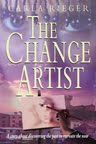
Carla Rieger is the author of the award winning book and now the screenplay The Change Artist. After her father died, she discovered a hidden box of mementos suggesting he had changed his identity a couple of times in his life. Her journey of uncovering the truth completely changed her life. She used a novel format instead of a memoir or biography because of the advantages listed above. For more information about Carla and the book go to: www.thechangeartistbook.com.

Comments Off on The Advantages and Disadvantages of Turning Family Research into a Novel

Filed under Guest Blogger

The Butler Did It!

by Irene Butler

The Butler Did It!  That is… Rick and Irene Butler Did It!  Be ready for this old cliché to take on new meaning when you read my book!

What did we do? We circumnavigated this beautiful big blue ball for the same cost as being couch potatoes. “Trekking the Globe with Mostly Gentle Footsteps: Twelve Countries in Twelve Months” is about our encounters, from the enlightening to the bazaar and the lessons we learned along the way.

Embedded travel tips tell how you too can succeed in meeting a budget, while still adhering to our travel motto “we are not here to suffer”, and how to not let the 24/7 “togetherness” end in divorce. Plus a sharing of the most valuable lesson of all “expect the unexpected”.

Learn more about Trekking the Globe at www.globaltrekkers.ca and also check out the many other countries we have trekked through and the experiences that have “wowed” us – such as this year’s adventures in the oil-rich United Emirates, Oman, Qatar, Bahrain, where excesses are astonishing; then the mysterious allure of Syria, the seaside rhythms of Jordan and Sinai coasts, the intensity of Israel, and our path through Technicolor Vietnam.

Safe Travels Always,
Irene Butler
Author/Travel Writer/Photographer

Comments Off on The Butler Did It!

Filed under Guest Blogger

Title: The Simple Truth About Branding

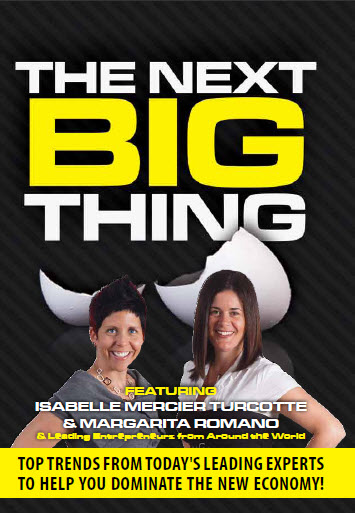
by Isabelle Mercier Turcotte

PERCEPTION IS REALITY IN BRANDING AND IN LIFE FOR THAT MATTER.

Every entrepreneur wants to have their company’s brand “WELL KNOWN, TRUSTED & DESIRED” …but not all brands are worthy of that privilege.

What is branding? Well, let me start by clarifying what branding is not:

  • Branding is NOT marketing and branding is NOT a logo either. A logo means absolutely NOTHING, unless of course, the company behind it does.

The truth is that successful branding is not represented by a cool logo, it’s much more than that. Successful branding is a combination of an authentic promise with a clear, aligned and consistent delivery. These elements are crucial because the promise and delivery are what build trust in your company and increase customer loyalty.

Here are 5 tips to help you build a successful brand:

1. BE CLEAR ABOUT YOUR COMPANY’S PURPOSE.
A purpose is the big WHY behind the WHAT you and your company are truly meant to be doing and it’s what gets you and your team out of bed in the morning. Know and share that purpose and learn to “Stay On Purpose” with everyone you work with and everything you do. A brand is not a brand without a strong cause.

2. DEFINE YOUR IDEAL CLIENT.
Not all clients are ideal clients – far from it. Know who you truly want to work with and who you are best suited to help. Know what companies inspire you and why. The why is important as it is usually closely linked to fulfilling your purpose and aligning with your core values. (Core values are what you stand for, your decision makers).

3. KNOW WHAT YOU ARE SELLING.
It is important to be very CLEAR (internally with your team and externally with your communication tools) on what you are selling. If you are not clear, how can you expect your prospects to be! Here’s an example:

What does Nike sell? They don’t sell sneakers, socks or sports apparel.
Nike sells athleticism and victory.

If you watch any Nike commercial, you will find that they don’t talk about how they manufacture the soles of their shoes, and they never mention the durability of the leather.

So what DO they do? They tap into the emotional connection with inner drive, our profound desire to push past our limits and achieve something great. What you will see in Nike commercials is a basketball player hitting a three point shot on the buzzer to win the championship; or the look of determination on the early morning runner’s face as she blazes through her town.

The tangible product or service we all sell is the catalyst that addresses the deeper, emotional need.

4. FIND YOUR NICHE.
Don’t try to be everything to all people. Be clear about what you are BEST AT SOLVING in this world and offer that to those who get it, need it and want it. The more you define and focus your brand on the one thing that you do better than anyone else, the more clients will recognize you and respect you for it, therefore contributing to building a stronger brand.

5. BUILD GREAT RELATIONSHIPS.
Margarita and I built our previous business’ reputation solely on great relationships and ideal referrals. I truly believe that if you take care of your clients, and understand and deliver on their needs, other great people and other great brands will want to be a part of that.

Building a successful brand is building trust; it takes time and needs constant attention. It is a mixture of attracting new ideal business, hiring the best people and delivering on your promise day in and day out.

And that is the simple truth about branding!

Leap of the Week:
Take a few minutes to think about what you are really selling, beyond your product or service. How is your product or service making life better?

Find us online:

Website: https://www.leapzonestrategies.com

Blog: https://www.leapzonestrategies.com/blog

LeapTV: https://www.leaptv.com

MyLeapTools: https://www.myleaptools.com

Facebook: https://www.facebook.com/LeapZone

Twitter: @leapzone

Comments Off on Title: The Simple Truth About Branding

Filed under Guest Blogger

There are No Loopholes in Intention

Sheryl Eldene, MA, MBA

One of the Laws of Attraction that I attend to is the awareness that wherever I put my attention, I’m also placing my energy and thereby, my power. I also know that any words that I speak are filled with my energy and become powerful in my life. Since I know there are are no loopholes, no way around this law, I was shocked to hear what came out of my own mouth this morning as I looked at the scales – which haven’t moved in a month or so – and said “I just can’t lose this weight, what’s wrong with me, anyway”.

Based on this Law of Attraction, I just set in motion a self fulfilling prophecy.

 OH RATS!!

I’m also the strengths based coach, so taking energy to discover what is wrong with me, might not be the best use of my focus. Here are my notes-to-self that I thought you might appreciate, too:

  1. What has actually improved over the last month that represents my real priority?
  2. What strengths do I have that will support my intention to be heathly and smaller?
  3. Assuming, I’ve been living On Purpose, what has the purpose of the past month been?
  4. What is the intention for this month?
  5. What is the one thing I desire independence from and what is the one dream I desire to celebrate at the end of July?

OK, world, here are my answers:

  1. What has improved? I’ve added walking regularly to my habits and am beginning to feel more energy.
  2. What are my strengths? My strength this month is my loyalty to the health of my puppy, who needs to walk every day.
  3. My true purpose? My true purpose for this last month has been to adapt to Sammy, and to survive getting up a couple times in the night to let him visit his favorite puppy-pee places.
  4. My intention for this month is to keep my focus on my business, to continue healthy walks, to find a way to be alpha dog while protecting the puppyhood of His Littleness.
  5. I want independence from a preconceived idea of how my body wants to return to health and vitality and I want to celebrate comfortably zipping up my favorite shorts.

As we move into a new month, and the third quarter of the year, remember, there are no loopholes in the link between your intentions and your results.  Thoughts and words are things – chose the good ones.

Comments Off on There are No Loopholes in Intention

Filed under Business Planning, Dreams, Intentions, Motivation, Sheryl Eldene, Strategy

Seasons and Cycles

By Gail Z. Martin

The world around us is a place of seasons and cycles.  Spring, summer, fall and winter come with reassuring regularity.  The moon moves through its phases month after month.  Tides rise and fall with predictability.  We plan our lives according to the seasons and cycles around us.

Business also has cycles.  Every industry has its own variation of a sales cycle or a  product lifecycle.  Some businesses, such as those in the travel and tourism industry, may be very attuned to the physical seasons.  Ski in the winter, go to the beach in the summer.  Or, a business may be governed by more arbitrary cycles.  Accountants are busy before April 15.  Retailers gear up for back-to-school and the holiday rush.  Other companies are driven by budget cycles or annual proposals.

Business owners are not immune to seasons and cycles.  Think about the past year.  Were there predictable periods when you knew you would be overworked or stressed out?  How about periods where you could anticipate a chance to get caught up or catch your breath?  Now think about how the seasons and cycles may affect your decision making and your accessibility as a manager, or your vision as an entrepreneur.  During the crazy season, you may be moving as fast as you can, but are stress and fatigue hurting your mood, temper or decision-making ability?  Are you as good a boss during the peak times as you are during the less crazed periods where you have more time to listen and the opportunity to deliberate on an answer?  Does your stress radiate throughout the organization, hindering everyone else’s productivity and dampening the office mood?

When you stop to notice how business cycles and seasonal demand affect us as entrepreneurs, we see that we may have our own  personal “hurricane season”  with moody tempests or a “La Nina” firestorm due to frayed nerves and an over-extended calendar.

Once you understand and recognize your own personal seasons and cycles, you can start to take measures to keep storm season from becoming a disaster.  Don’t be afraid to delegate more in order to give yourself breathing room.  Get temporary help or interns.  Make time even in the busiest seasons to take care of yourself with healthy food, enough sleep, exercise, and short relaxation breaks.  Making a conscious effort to manage your storm season can have a huge positive impact, not just on your personal wellbeing, but on the mood and productivity of everyone who depends on you.

Comments Off on Seasons and Cycles

Filed under Gail Z. Martin, Marketing, Strategy

How Wise It Is: Volunetter To Stay In Touch With The Joy Of Giving When You Have Been Uprooted

By Stephen G. Post

www.stephengpost.com/hiddengifts

We can be anywhere, so long as we are helping others and caring for them. This is probably the one source of stability in our lives that we can truly depend on, and so in the end we are never really out of place. At the right dose, contributing in small ways to the lives of others is a one-a-day vitamin for body and soul. I drew on this in recent years as my family and I navigated the peaks and valleys of a big relocation from Cleveland, where I had taught for twenty years in the medical school of Case Western Reserve University, to Stony Brook University in New York (www.stonybrook.edu/bioethics).

A few months after we arrived here, a psychiatrist researcher and friend in New York told me the story of social isolation and a big move leading to suicide. In one of his cases, a remorseful patient named Dave reported that his wife of twenty years had committed suicide with an overdose of sleeping pills while he was away on a business trip. Just a few months before the suicide, this childless couple had relocated to a town where they had neither relatives nor friends. Dave’s marriage was difficult because he was a heavy drinker. His boss thought that a move might give him a fresh perspective. (Actually, moves do not solve such problems, they just relocate them.) Evidently he and his wife had argued bitterly in the days immediately preceding her suicide. Presumably, she resented being uprooted due in part to her husband’s drinking habits.  (I was reflecting on this encounter a few months ago when I was doing some lecturing in the Southwest. One of my old friends said that when he and his wife and kids moved from a city in the Northeast to a remote small city, his wife so missed all of her friends and social networks that she actually became clinically depressed for the first time in her life.)

What if Dave’s wife had had a chance to get involved right away in some helping activity, such as volunteering for an organization that she found especially meaningful? Would this have saved her? It would probably have helped, as it often does for “trailing spouses,”  be they male or female. Within certain limits, of course, a good way to become free from darker emotions is to get out and help people by doing “unto others” in a voluntary organization that provides social support in the process of serving others. Emotions typically follow along with actions, and move in positive directions as a result of helping. The scientific investigations on these benefits focus on relatively modest activities – a few hours of volunteering once a week.

I suppose that wherever we are after a big relocation, we are still at home if we can stay in touch with the joy of giving. Big moves are not just about  “getting acclimated” to a new environment, although there is no question that we don’t quite feel at ease until the things around us become familiar and we begin to feel at home. We humans are creatures of “object relations,” and we live in the visual and audio “symbols” of our environment just as they live in us. But more seriously, pulling up roots disrupts relationships, no matter how much we try to stay connected-in-a-way by electronic gadgets. At a certain level, as the philosopher wrote, “out of sight, out of mind.” People back home move on to new relationships in the real world of face-to-face interactions.

So we lose what Robert Putnam and other sociologists refer to these days as “social capital,” and we need to rebuild it as soon as possible for our mental and physical health. Rebuilding is easier for some people than for others, depending on personality types, age, resiliency, and whether a move felt forced due to difficulties such as job loss, home foreclosure, or illness. Moving along on the journey of life can be glorious in younger years after a stable high school experience. Younger folks like to explore the world and try something new. But for those who are in their middle or late life, leaving a place where so much energy and heart has been invested over the years in building relationships and community opens the doors to all kinds of psychological challenges. The epidemiology is clear: Depression rates rise a bit as people begin to feel deeply the lost of friends, acquaintances, and the background familiarity that they tend to take for granted. Suicide rates rise, a fact that Emile Durkheim grasped well in his sociological analysis of the rise of suicide in the modern world due to loss of stable cummunitas and the resulting malaise of anomie. Men who move in mid-life have considerably higher rates of heart disease. No doubt the stress of having to start over and recreate life is a lot to bear, and can be hugely stressful for self and family. What could contribute more to the epidemiology of what psychologist James Lynch called “the broken heart” than a big unwelcome move that rips a person out of the world where they have been, as the philosopher Ed Casey writes, “implaced.” It often takes a few years to recreate what was lost.  It is easier for military families because everyone is on the move, and the culture of military social life and adjustment is more routine – although it is still not an easy way of life.

This gets me back to a favorite theme – the “helper therapy principle” can salvage your life in tough times. I first heard of something like “helper therapy” from my Irish mother. On my boring “off days” as a child, Molly Magee Post told me, “Stevie, why don’t you just go out and do something for someone?” No, she did not say, “Stevie, go read a book,” or “Stevie, go clean up your room.” I read a lot anyway, and kept an orderly room. Heading across the street I would give old Mr. Muller a hand raking leaves, or help Mr. Lawrence fix his mast. It always felt pretty good. Such simple action, but it brings together spiritual, moral, and health psychology in a common chorus, and it may be one of the few things that constitutes universal truth.

In a new community, volunteering is a good way to recreate social networks. People who volunteer tend to report better health, greater happiness, lower anxiety levels, deeper meaning, and even sleep a little better. Helping is a buffer against helplessness, and an affirmation of self-efficacy – I can do this! Find something to do that is meaningful, draw on talents and strengths in order to feel effective, and have faith that even if at first you are not quite inspired, your capacity of joy will eventually catch up with your actions.  As Putnam points out in his new book, American Grace (2010), a great deal of rebuilding social networks occurs in and through communities of faith. So, if you happen to be a person of faith, one of the best things to do after you land in a new place is to find a congregation of fellow believers. These days we have so many researchers concluding that the brain is essentially a social organ with its cells and pathways wired for empathy, for experiencing the joys and sufferings of others as if they are our own. Inhibit giving and inhibit flourishing.

Abraham Lincoln navigated a lot of melancholy. He said, “When I do good, I feel good; when I do bad, I feel bad.” No, there is no certainty of pay back, and Lincoln was not keeping score. But his generosity and helping behaviors gave him inner peace and the strength to overcome a history of depression. The idea here is to help others and do good because that is just the happiest and healthiest way to live out one’s life; it is also the way of life that is the most inwardly fulfilling, regardless of whether one gets anything back from others. Virtue, as the saying goes, is its own reward. Pay it forward, no need to pay it back, and hope to inspire others to “go and do likewise.” But in giving there is a glow, an inner benefit to the giver that can be seen in buoyancy and effervescence, and this is something that we can depend on pretty well; reciprocity, in contrast, is never reliable, however much we should all be gracious recipients when others seek to return kindness. We have to break free of “tit for tat” mentalities that require a response in kind. This iron law of reciprocity hangs over our necks like a sword of Damocles, keeping us from the inner freedom of love without limits.

Helping others rarely stands alone. Studies show that it brings with it an internal freedom, a sense of meaningful agency, joy, hopefulness, and peace. In this sense, helping love leads us into a family of emotions that are so strongly and closely connected that they blend together into one harmonious state of being. It is impossible to imagine love not giving rise to a spontaneity and liberation from all those emotions that weigh us down; it is impossible to imagine loving without joy and delight in the beloved; it is impossible to imagine loving without having hope in them and for them; and it is impossible to imagine loving in any sustained way without an inner peace and gratification that by its nature denies violence in emotion, word, intention, or deed.

The 2010 Do Good Live Well Survey, released by United Healthcare and VolunteerMatch (www.VolunteerMatch.org), surveyed 4,500 American adults. 41 percent of Americans volunteered an average of 100 hours a year. 68 percent of those who volunteered in the last year reported that volunteering made them feel physically healthier. In addition,

  • 89% report that “volunteering has improved my sense of well-bring”
  • 73% agree that “volunteering lowered my stress levels”
  • 92% agree that volunteering enriched their sense of purpose in life
  • 72% characterize themselves as “optimistic” compared to 60% of non-volunteers
  • 42% of volunteers report a “very good” sense of meaning in their lives, compared with 28% of non-volunteers

How wise it is to do what one can to contribute benevolently to others!

This “giver’s glow,” as I term it, has healing properties. Inner wholeness, nirvana, true peace – these are all related to the activity of self-giving love. A glow stick is a translucent plastic tube containing substances that when combined make light through a chemical reaction. After the glass capsule in the plastic casing is broken, it glows. The brokenness is part of the process. Give and grow, give and glow.

________________________

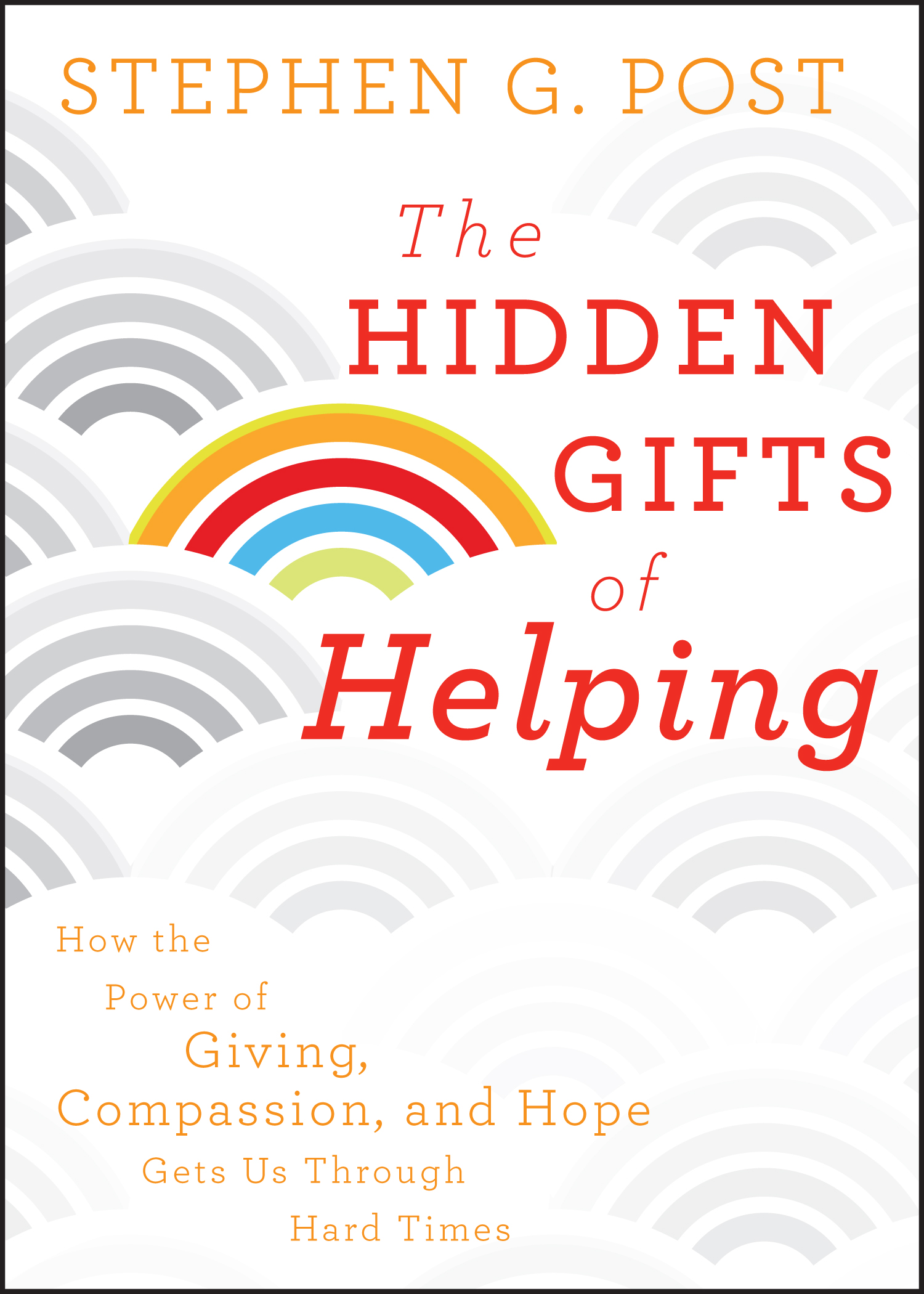
Stephen G. Post (www.StephenGPost.com) is the best-selling author (Wall Street Journal list) of The Hidden Gifts of Helping: How the Power of Giving, Compassion, and Hope Can Get Us Through Hard Times (2011). He is Professor of Preventive Medicine, Head of the Division of Medicine in Society, and Director of the Center for Medical Humanities, Compassionate Care, and Bioethics at Stony Brook University (www.stonybrook.edu/bioethics). He was previously (1988-2008) Professor of Bioethics, Religion and Philosophy, School of Medicine, Case Western Reserve University, and Senior Research Scholar at the Becket Institute of St. Hugh’s College, Oxford University. Post is a Senior Fellow in the Center for the Study of Law and Religion at Emory University.

Post is recognized as a leader in the study of altruism, love, and compassion in the integrative context scientific research, philosophy, and spirituality. He is President of the Institute for Research on Unlimited Love (www.unlimitedloveinstitute.com), founded in 2001 with support from philanthropist John Templeton and the Templeton Foundation. As a boy Post studied the philosophy and theology of  love at St. Paul’s School in New Hampshire with the distinguished African-American Rev. John T. Walker, who later became Dean of the National Cathedral. He completed his Ph.D. on the relationship between other-regarding love and happiness at the University of Chicago, where he was an elected University Fellow, a preceptor in the Pritzker School of Medicine, and a Fellow in the Martin E. Marty Center for the Advanced Study of Religion. He received the Hope in Healthcare Award in 2008 for his “pioneering research and education in the field of unconditional love, altruism, compassion, and service.” He was included in Best American Spiritual Writing (2005), and in 2008 he was the recipient of the Kama Book Award in Medical Humanities from World Literacy Canada. Post is an elected member of the International Society for Science and Religion, and writes a blog for Psychology Today entitled “The Joy of Giving.”

Post is an elected member of the Medical and Scientific Advisory Panel of Alzheimer’s Disease International, and was recognized for “distinguished service” by the Alzheimer Association’s National Board for educational efforts for Association Chapters and families throughout the United States (1998). In 2003 het was elected a Member of the College of Physicians of Philadelphia for “distinguished contributions to medicine.” His book entitled The Moral Challenge of Alzheimer Disease: Ethical Issues from Diagnosis to Dying (The Johns Hopkins University Press, 2000, 2nd edition) was designated a “medical classic of the century” by the British Medical Journal in 2009. Post is the primary author of over 150 articles in journals such as Science, Annals of Internal Medicine, The Journal of Religion, The American Journal of Psychiatry, The Journal of the American Medical Association, and The Lancet.

A public intellectual committed to conveying important ideas in the wider culture, Post has appeared on a diverse range of radio and television programs including The Daily Show, Dr. Oz, Nightline, 20/20, and National Public Radio. Post is sought after as a public speaker by community and professional groups, and is the recipient of the “Top Notch Public Speaker Award” from the Endowment for the Humanities.

A member of the Episcopal Church, Post’s grandfather Edwin Main Post was the husband of Emily Post.

www.stephengpost.com/hiddengifts/
Comments Off on How Wise It Is: Volunetter To Stay In Touch With The Joy Of Giving When You Have Been Uprooted

Filed under Guest Blogger

Break or Take a Break

By Gail Z. Martin

I was behind someone in line a few days ago and couldn’t help hearing part of his conversation with his companion.  What caught my attention was the man’s comment that he hadn’t had a vacation in fifteen years.

Wow.  While I’m sure this man was proud of his diligence and hard work, I couldn’t help wondering how badly burnout might be affecting the value of his output.  In my experience, you either break or you learn to take a break.

Now I know that with some of the ups and downs of the economy, “staycations” have replaced vacations for many people.  The point isn’t about leaving town, staying in a hotel, or going somewhere exotic.  For me, the essential point is to step away from the swift current of your busy life for even a day, an afternoon, a weekend and rest, relax and refresh yourself.

Some people like to brag that they are so essential, their business couldn’t last a few days without them.  Usually, this means they have avoided developing procedures and delegating trivia, or that they have made themselves the roadblock, either out of a love of being important or the need to micromanage.  Eventually, the stress catches up and the business is forced to do without them while the indispensable manager recovers from a heart attack or other stress-related ailment.

Other people have never learned how to relax.  Maybe they were told that it was bad not to be active every minute–“idle hands are the devil’s workshop.”  American culture has the unfortunate habit of undervaluing rest and restoration and overvaluing activity for activity’s sake.  If that’s your hang-up, let it go.

When we allow ourselves to take a break, wonderful things happen that actually enhance future productivity.  By taking a step away from the normal flow of things, we often gain new and valuable perspective.  By resting, we preserve our health and prevent a longer, possibly destructive interruption due to illness.  When we move outside our normal routine to go somewhere new, do something different or have a new experience, we become open to unexamined possibilities.  And when our break frees up time for us to nurture our family and close friendships, we preserve the relationships that support us and enable us to do our best work.

This summer, make a commitment to yourself to take a break at regular intervals and see what new possibilities emerge.

Comments Off on Break or Take a Break

Filed under Gail Z. Martin, Marketing, Social Media

Learning to breathe

By Gail Z. Martin

I’ve heard a lot lately about being mindful so that one doesn’t spend more time working IN the business than ON the business.  Meaning that it’s possible to get so caught up in the daily grind that we stop doing the things that help our businesses grow.  One of these important, but often overlooked, items is, I believe, taking time to breathe.

Sure, you breathe, or you wouldn’t be alive to read this.  But did you know that most Americans take short, shallow breaths that contribute to the feeling of tenseness and panic?  We rarely stop to take deep breaths, breaths that begin in the belly and then expand through the chest.  We seldom take even a few moments to focus on the act of breathing, feeling the air fill us, and then letting go of the breath in a slow, calm way.

In Tai Chi, as with most martial arts and with disciplines like Yoga, breath is everything.  But you don’t have to be a martial arts master to get a sixty-second vacation by taking a moment out of your hectic, stress-filled day to savor a few calm breaths.

The next time you feel your neck growing tight, your temples beginning to throb and your back starting to clench, take a few moments and breathe.  Close your eyes and pay attention to the rhythm of your breath.  Is it fast and shallow?  If so, slow down your breathing by taking breaths that begin in your abdomen and then fill you all the way through your chest.  Hold it for a second and then try to let it go just as slowly, listening to it rush through the nose.  Even five or six deep, slow breaths make an amazing difference in the perceived stress.  After a few deep, slow breaths, it becomes easier to relax your shoulders, unclench your jaw, relax your lower back.  If your heart is pounding after a distressing phone call or office confrontation, deep, slow breaths can help you bring your mind and body back into a calm, rational state where you can make better decisions and think more clearly.

The next time stress gets to you, put the miracle of breath to work and notice how clear your thoughts become, how much faster you recover, and how much better you feel.

Comments Off on Learning to breathe

Filed under Gail Z. Martin, Inner Coach, Marketing